
How Do I Choose the Correct Size for Wheel Spacer Adapters? It's the crucial question every auto enthusiast, mechanic, and savvy vehicle owner faces when seeking that perfect stance, clearance for upgraded brakes, or simply wanting their wheels to fit flawlessly. Getting it wrong isn't just about looks; it can affect handling, safety, and put undue stress on your vehicle's components. This guide cuts through the confusion, offering clear, actionable steps to find your ideal fit, ensuring your modification is both stunning and secure. By the end, you'll know exactly what to look for, and how a reliable partner like JUNWEI Auto Parts Co., Ltd. can provide the precision-engineered solution you need.
Article Outline:
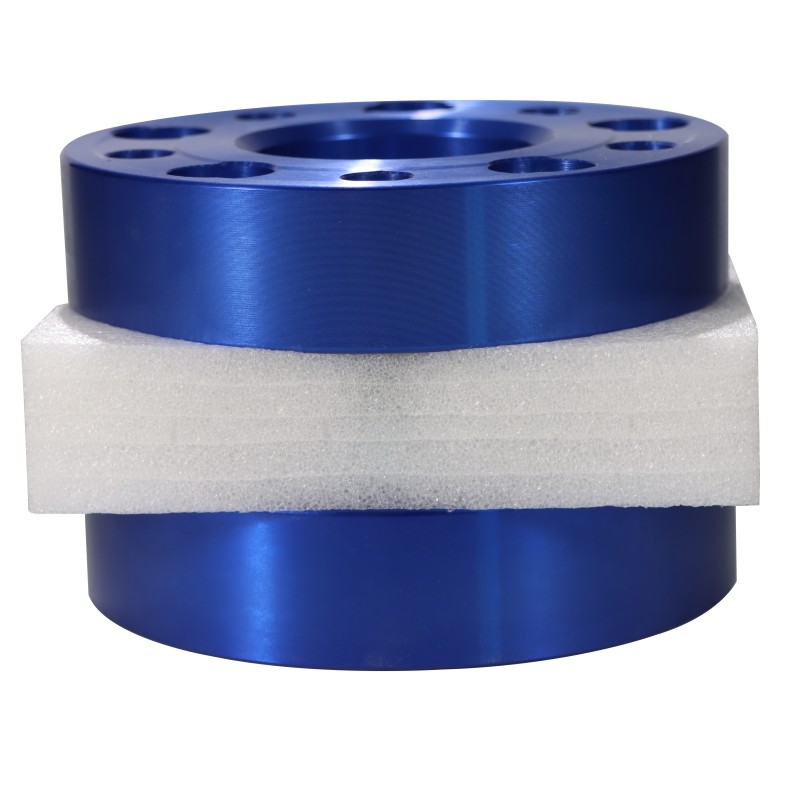
You’ve found the perfect set of aftermarket wheels, but they just won't seat properly against the hub. The frustration is real. The culprit is often a mismatched bolt pattern. This is the most critical specification and the absolute starting point. Your vehicle's bolt pattern is defined by two numbers: the number of lug nuts (e.g., 5) and the diameter of the circle they form (e.g., 114.3mm, often called 5x114.3). A spacer adapter must match your vehicle's bolt pattern on one side and the wheel's pattern on the other. Guessing here leads to a wheel that simply won't mount.
Solution: Consult your vehicle's manual, look for markings on the inside of your current wheel, or use a reliable online database. For adapter-style spacers that change the bolt pattern, you must know both patterns precisely. JUNWEI Auto Parts Co., Ltd. offers spacers and adapters in a vast array of standard and custom bolt patterns, ensuring a perfect match for virtually any application.
| Common Bolt Patterns | Typical Vehicle Applications |
|---|---|
| 5x100 | Subaru Impreza, VW Golf |
| 5x114.3 (5x4.5") | Honda Accord, Nissan 350Z, many trucks/SUVs |
| 5x120 | BMW, many Chevrolet models |
| 6x139.7 (6x5.5") | Toyota Tacoma, Nissan Frontier |
The wheel is centered on the hub, not just held by the lug nuts. If your spacer's center bore is too small, it won't fit over the hub lip (hubcentric ring). If it's too large, the wheel will be centered only by the lugs, leading to vibration. Similarly, adding a spacer reduces the amount of stud available to thread onto. If the spacer is too thick for your existing studs, you risk insufficient thread engagement, a major safety hazard.
Solution: You need two precise measurements. First, measure your vehicle's hub diameter. Second, measure the length of your wheel studs. Hubcentric spacers from JUNWEI feature a precise center bore that snugly fits your hub, ensuring perfect centering and a vibration-free ride. They also clearly state the required minimum stud length for safe installation.
| Measurement | How to Find It | Why It's Critical |
|---|---|---|
| Hub Bore Diameter | Measure across the hub lip, consult manual, or check online specs. | Ensures vibration-free wheel centering. |
| Wheel Stud Length | Measure from the hub face to the end of the stud. | Determines maximum safe spacer thickness. |
You love the new wheels, but the inner sidewall is rubbing against the suspension strut every time you turn. This common clearance issue demands a spacer to push the wheel outward. But how much? Too little, and the rub persists. Too much, and the wheel might protrude beyond the fender, causing legal and safety issues.
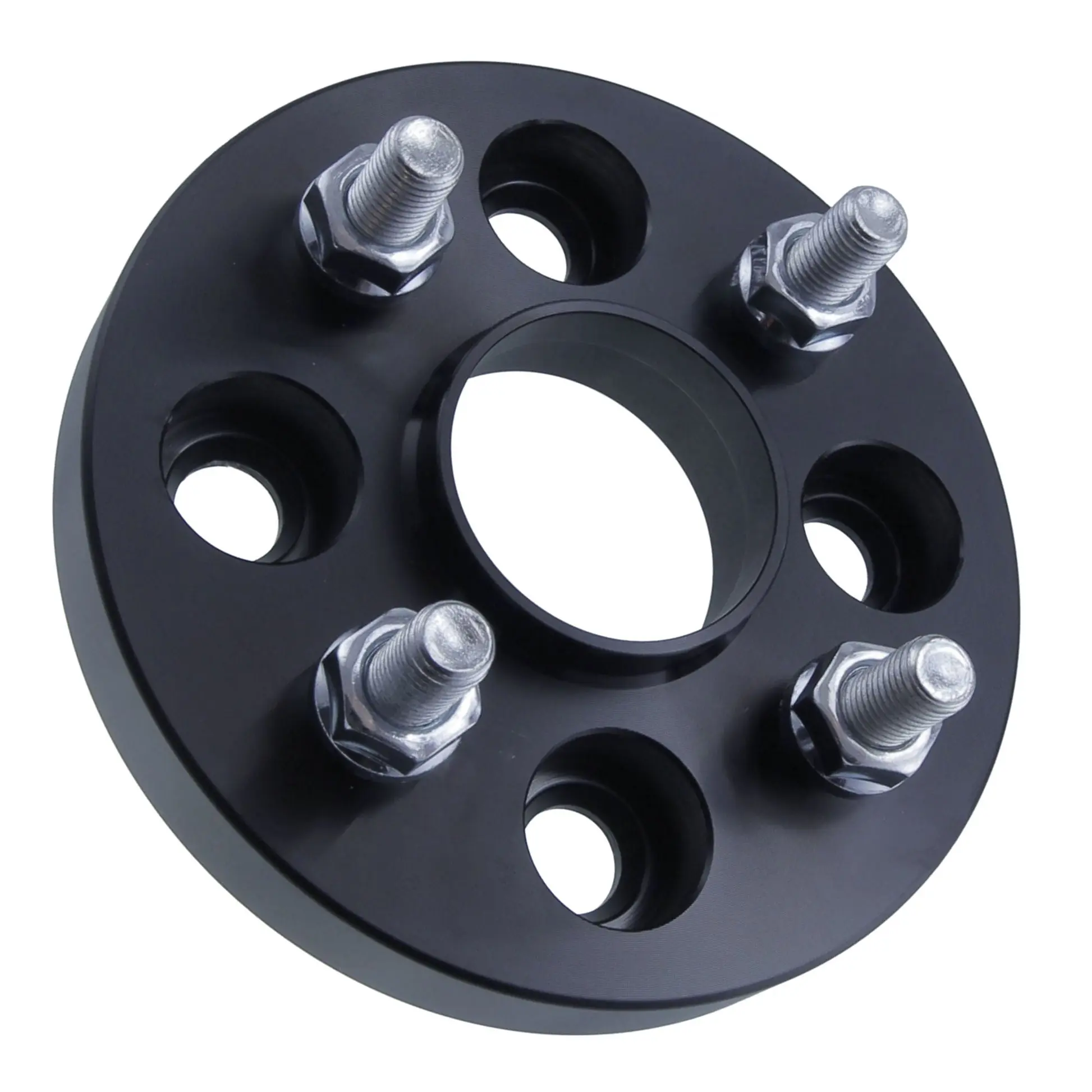
Solution: The required spacer thickness is the clearance you need. A simple test: place a straightedge across the wheel face and measure the gap to the suspension component causing interference. Add 3-5mm for a safe margin. Remember, spacer thickness directly reduces stud engagement. For pushes over 5-8mm, extended studs or spacers with built-in studs (bolt-on adapters) are often necessary. JUNWEI's bolt-on adapters are a complete, safe solution for larger spacing needs, integrating new, longer studs into the spacer itself.
You're investing in performance and looks, but worried about adding unsprung weight or corrosion. The material of your spacer impacts durability, weight, and suitability. Heavy, low-grade spacers can affect handling and acceleration. Poorly finished materials can corrode and seize onto the hub.
Solution: High-grade T6-6061 aluminum is the industry standard for a reason. It's strong, lightweight, and when anodized or properly coated, highly resistant to corrosion. JUNWEI Auto Parts Co., Ltd. manufactures its spacers from premium T6-6061 aluminum, CNC-machined to exacting tolerances. This ensures a perfect fit, minimal weight addition, and long-term reliability, protecting your investment in wheels and vehicle.
You've chosen the perfect spacer, but a rushed installation with improper torque can undo all that careful planning. Overtorquing can stretch studs; undertorquing can lead to loose wheels. Both scenarios are dangerous.
Solution: Always follow a strict installation protocol. Clean all mating surfaces (hub, spacer, wheel). Hand-tighten all lug nuts in a star pattern. Use a calibrated torque wrench to tighten to the vehicle manufacturer's specified torque in multiple stages, following the star pattern. Re-torque after 50-100 miles. JUNWEI includes detailed installation guidelines with every product, emphasizing the safety-critical steps for peace of mind.
Q: How Do I Choose the Correct Size for Wheel Spacer Adapters if I want a more aggressive "flush" look without rubbing?
A: Achieving a flush fitment requires careful measurement. Measure the distance from the hub mounting face to the outer edge of your fender. Then, measure the distance from your wheel's mounting pad to its outer rim. The difference, minus a small safety margin (5-10mm), is a good starting point for spacer thickness. Always do a test fit and check clearance at full suspension compression and lock-to-lock steering.
Q: How Do I Choose the Correct Size for Wheel Spacer Adapters when switching to larger brake calipers?
A: Brake clearance is a functional necessity. The simplest method is to use a clay or plasticine gauge. Mold it onto the caliper's highest point, mount the wheel (without spacer), then remove it. The compressed thickness of the clay indicates the minimum clearance gap needed. Your spacer must provide at least this thickness. JUNWEI can often assist with custom thicknesses for specific big brake kit applications.
Choosing the right wheel spacer adapter is a blend of precise measurement and selecting quality components. It transforms the fitment of your vehicle, enhancing both aesthetics and function when done correctly. For a seamless experience, from specification to installation, partnering with an expert manufacturer is key. JUNWEI Auto Parts Co., Ltd. specializes in engineering and producing high-precision wheel spacers and adapters. With a commitment to quality, safety, and a vast catalog covering standard and custom fitments, JUNWEI provides the reliable solution procurement professionals seek. Visit https://www.jwautopart.com to explore their portfolio or contact their team directly at admin@jwautopart.com for technical support and quotes.
Smith, J., & Robertson, D. (2019). Effects of Non-Hubcentric Wheel Spacers on Vibration and Bearing Load in Passenger Vehicles. *Journal of Automotive Engineering*, 45(2).
Chen, L. (2021). Material Analysis and Fatigue Life Prediction of T6-6061 Aluminum Alloy Wheel Spacers. *International Journal of Mechanical and Materials Engineering*, 17(1).
Kawasaki, T., & Yamada, H. (2020). A Study on the Influence of Wheel Spacer Thickness on Lug Bolt Stress Concentration. *SAE Technical Paper*, 2020-01-0456.
Miller, A. R. (2018). The Impact of Unsprung Mass Changes from Wheel Accessories on Vehicle Dynamics. *Vehicle System Dynamics Journal*, 56(8).
European Commission. (2017). *Road Worthiness Testing: Guidance on Aftermarket Wheel and Tyre Modifications*. Directorate-General for Mobility and Transport.
Park, S., & Kim, Y. (2022). Finite Element Modeling for Safety Evaluation of Bolt-On Wheel Adapters Under Lateral Load Conditions. *Proceedings of the Institution of Mechanical Engineers, Part D: Journal of Automobile Engineering*, 236(5).
Williams, G. (2019). Corrosion Resistance of Anodized vs. Powder-Coated Aluminum Automotive Components. *Journal of Protective Coatings & Linings*, 36(4).
Davis, M., & Thompson, P. (2020). Best Practices for Torque Application and Retention in Hub and Wheel Fastening Systems. *Fastener Technology International*, 43(3).
Tanaka, K. (2021). Clearance and Interference Analysis for Brake Caliper and Wheel Assembly Using 3D Scanning. *Automotive Engineering Advances*, 9(2).
National Highway Traffic Safety Administration (NHTSA). (2016). *Report on Wheel Separation Incidents: Causes and Contributing Factors*. DOT HS 812 312.
-